This post contains affiliate links, which means I may earn a small commission at no extra cost to you. I only recommend products I truly use and love!
The “In a Nutshell” Box
| ⏱️ Time Required | 30 Minutes to Set Up |
| 🌱 Skill Level | Absolute Beginner — No Green Thumb Required |
| 💰 Estimated Cost | $15–$60 (depending on pot choices and number of plants) |
| ✨ Core Benefit | A home filled with living, breathing greenery that makes every room feel alive — without the stress of keeping anything alive |
A Letter to Every Woman Who Has Ever Killed a Cactus
Let me guess.
You have tried houseplants before. Maybe more than once. You brought home something beautiful from the garden center, full of hope and good intentions. You gave it a pretty pot. You put it in a sunny window. You watered it faithfully.
And then… something went wrong. The leaves turned yellow. Or brown. Or it just quietly gave up one day while you were not looking. And you stood there staring at it thinking, “How? How did I kill this thing? I was trying so hard!”
Or maybe the opposite happened. You forgot about it for three weeks during a busy stretch, and when you remembered it, it was already gone.
Either way, you arrived at the same conclusion that millions of well-meaning plant parents arrive at every year: “I just do not have a green thumb. Plants and I are not meant to be.”
Friend, I am here today to tell you something very important: The green thumb is a myth.
What most people call a “green thumb” is simply knowing which plants to choose. The truth is that most of the plants sold at garden centers are fussy, high-maintenance varieties that need very specific conditions to thrive. They are beautiful, but they are not beginner-friendly.
The five plants I am sharing with you today are completely different. These are plants that have survived in offices with no natural light. Plants that have gone unwatered for a month and come back stronger. Plants that have been repotted badly, placed in the wrong window, forgotten about entirely — and kept right on growing.
These plants do not need a green thumb. They just need a home. And you have one of those.
Let’s get you some plants.
Before We Meet the Plants: The Two Rules of Beginner Plant Success
Before I introduce you to your new leafy roommates, I want to share the two rules that will make all the difference between thriving plants and another heartbreaking trip to the compost bin.
Rule #1: Overwatering Kills More Houseplants Than Underwatering
This is the single most important thing I can tell you about keeping houseplants alive. Most beginners kill their plants not from neglect — but from too much love in the form of too much water.
When in doubt, do not water. Stick your finger an inch into the soil. If it feels damp at all, wait. Only water when the top inch of soil feels completely dry.
💡 The Game-Changer Tool: This inexpensive soil moisture meter takes all the guesswork out of watering. You simply stick it in the soil and it tells you whether your plant needs water. It is the single best investment a beginner plant parent can make — and it costs less than a cup of coffee.
Rule #2: Drainage Is Everything
Every pot your plant lives in must have a drainage hole in the bottom. Without drainage, water sits at the bottom of the pot, the roots sit in that water, and the roots rot. Root rot is the silent killer of houseplants everywhere.
If you fall in love with a decorative pot that has no drainage hole, simply use it as a cachepot — place your plant in a plain nursery pot with drainage holes inside the decorative pot. Best of both worlds!
💡 My Favorite Pots: These beautiful ceramic pots with drainage holes and matching saucers come in the most gorgeous colors and are perfectly sized for all five plants on this list. They look like they came from an expensive boutique but are incredibly affordable.
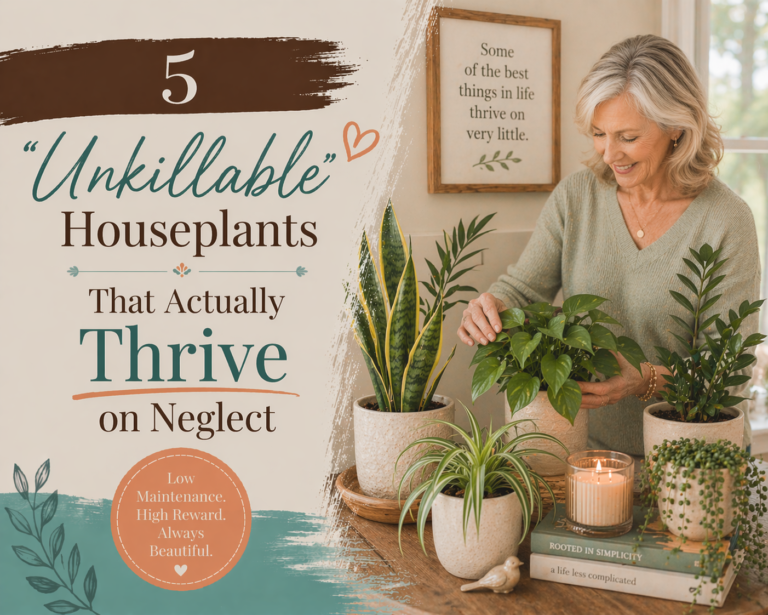
Plant #1: The Snake Plant
(Sansevieria — Also Called “Mother-in-Law’s Tongue”)
The Plant That Thrives on Neglect Like No Other
If there is one plant I would recommend to every single beginner on the planet, it is the snake plant. This is the plant that belongs in every home, every office, every room with a window — and quite a few rooms without one.
Why It Is Perfect for You:
- Survives in low light, medium light, and bright light — it genuinely does not care
- Only needs watering every 2–6 weeks depending on the season
- Actively purifies the air — NASA studies have shown it removes toxins like formaldehyde and benzene
- Has dramatic, architectural good looks — tall, upright, and striking in any room
- Is virtually impossible to kill through neglect
The One Thing That Will Kill It:
Overwatering. The snake plant stores water in its thick leaves and roots, so it truly needs very little. In winter, you may only need to water it once a month. When in doubt, wait another week.
Where to Put It:
Anywhere. Seriously. A bedroom corner, a bathroom shelf, a living room floor, an office desk. The snake plant is the most adaptable plant in existence.
What to Buy:
- The Plant: Snake Plant (Sansevieria Trifasciata) — 6 inch pot (Look for one with tall, upright leaves and no yellowing at the base)
- The Pot: This tall, modern ceramic pot in white or charcoal (The snake plant’s architectural shape looks stunning in a simple, clean pot)
- The Soil: Miracle-Gro Cactus, Palm and Citrus Potting Mix (The fast-draining formula is perfect for snake plants)
💡 Fun Fact: The snake plant is one of the few plants that releases oxygen at night rather than during the day — making it the perfect bedroom plant for better sleep!
Plant #2: The Pothos
(Epipremnum Aureum — Also Called “Devil’s Ivy”)
The Trailing Beauty That Refuses to Die
The pothos is called “Devil’s Ivy” for a reason: it stays green even in the dark. It is the most forgiving, most adaptable, most cheerfully resilient plant I have ever encountered — and it happens to be absolutely gorgeous.
Why It Is Perfect for You:
- Thrives in low to bright indirect light — no direct sun needed
- Tells you when it needs water by letting its leaves droop slightly — then perks right back up after a drink
- Grows long, trailing vines that look stunning cascading from a shelf or hanging basket
- Comes in multiple beautiful varieties — golden yellow, neon green, marble white, and more
- Propagates easily — one plant becomes many by simply snipping a vine and placing it in water
The One Thing That Will Kill It:
Direct, harsh sunlight will scorch the leaves. Keep it in bright indirect light or lower light conditions and it will be perfectly happy.
Where to Put It:
On a high shelf where the vines can trail down beautifully. In a hanging basket in a bathroom or kitchen. On top of the refrigerator. On a bookshelf between books. The pothos is endlessly versatile.
What to Buy:
- The Plant: Golden Pothos — 4 inch starter pot (The classic golden-yellow variegated variety is the most forgiving and the most beautiful)
- The Hanging Basket: This macramé hanging planter (A pothos in a macramé hanger is one of the most beautiful and effortless home décor statements you can make)
- The Pot: These self-watering pots (If you are worried about forgetting to water, a self-watering pot is an absolute game-changer)
💡 The Propagation Magic: Once your pothos is established and growing well, snip a 4-inch section of vine just below a leaf node and place it in a glass of water on a sunny windowsill. Within 2–3 weeks you will have roots, and within a month you will have a brand new plant — completely free. This is one of the most satisfying things in all of plant parenthood!
Plant #3: The ZZ Plant
(Zamioculcas Zamiifolia)
The Glossy, Glamorous Plant That Practically Waters Itself
If the snake plant and the pothos had a sophisticated, glamorous cousin who just returned from a European vacation, it would be the ZZ plant. With its deep, waxy, almost plastic-looking dark green leaves, the ZZ plant looks like it belongs in a design magazine — and it requires almost no care whatsoever.
Why It Is Perfect for You:
- Survives in very low light — one of the few plants that genuinely thrives in dim corners
- Stores water in its thick rhizome roots — meaning it can go weeks without water and not even notice
- Has zero pest problems — the waxy leaves repel most common houseplant insects
- Grows slowly and stays tidy — no pruning, no training, no fussing required
- Looks incredibly expensive and architectural — guests always ask about it
The One Thing That Will Kill It:
You guessed it — overwatering. The ZZ plant’s rhizome roots are essentially built-in water storage tanks. Water it thoroughly, then let the soil dry out completely before watering again. In winter, once a month is plenty.
Where to Put It:
That dim corner of the living room where nothing else will grow. The hallway with no windows. The home office with only artificial light. The ZZ plant will handle all of these situations with complete grace.
What to Buy:
- The Plant: ZZ Plant — 6 inch pot (Look for deep, glossy green leaves with no yellowing)
- The Pot: This matte black ceramic pot (The contrast between the glossy dark green leaves and a matte black pot is absolutely stunning)
- The Fertilizer: Liquid Houseplant Fertilizer (Feed once in spring and once in summer — that is literally all the feeding it needs all year)
💡 Style Tip: The ZZ plant looks most dramatic when planted in a pot that contrasts with its deep green color. Matte black, crisp white, or warm terracotta all look absolutely stunning with this plant’s glossy leaves.
Plant #4: The Peace Lily
(Spathiphyllum)
The Dramatic Bloomer That Tells You Exactly What It Needs
Every plant on this list is wonderfully low-maintenance, but the peace lily has a special superpower that makes it particularly perfect for beginners: it communicates. When it needs water, its leaves droop dramatically. Give it a drink, and within an hour it perks right back up — almost like it is saying thank you.
Why It Is Perfect for You:
- One of the very few houseplants that blooms in low light — those elegant white flowers are simply stunning
- Tells you when it needs water by drooping — no guesswork required
- Thrives in humidity — making it the perfect bathroom plant
- Actively purifies the air — one of the top air-purifying plants according to NASA research
- Has a lush, tropical look that makes any room feel like a spa
The One Thing That Will Kill It:
Direct sunlight will scorch its leaves badly. Keep it in low to medium indirect light and it will reward you with those beautiful white blooms year after year.
Where to Put It:
The bathroom is the peace lily’s happy place — it loves the humidity from showers and the typically lower light levels. It also looks absolutely gorgeous on a coffee table or as a centerpiece on a dining room sideboard.
What to Buy:
- The Plant: Peace Lily — 6 inch pot (Choose one with at least one white bloom already open — it means the plant is healthy and happy)
- The Pot: This white ceramic pot with a drainage saucer (White on white is a classic, elegant look that lets the plant’s beauty shine)
- The Humidity Tray: This decorative pebble humidity tray (Fill it with water and set the pot on top — the evaporating water creates the humidity the peace lily loves without any extra effort from you)
💡 The Drooping Trick: If your peace lily droops and you water it but it does not perk up within a few hours, check the roots. If they are tightly packed and circling the bottom of the pot, it is time to repot into a slightly larger container. A peace lily that has outgrown its pot will droop even when the soil is moist!
Plant #5: The Spider Plant
(Chlorophytum Comosum)
The Cheerful, Generous Plant That Keeps on Giving
The spider plant is the golden retriever of the houseplant world. It is cheerful, adaptable, enthusiastic, and endlessly generous — because once it is happy, it starts producing little “baby” plants on long trailing stems that you can snip off and pot up as new plants. It is basically a plant that makes more plants for you automatically.
Why It Is Perfect for You:
- Thrives in almost any light condition — low, medium, or bright indirect
- Extremely drought tolerant — misses a watering? No problem. It will forgive you completely.
- Produces adorable “spiderettes” — little baby plants on long arching stems that look beautiful trailing from a hanging basket
- Safe for pets and children — one of the few truly non-toxic houseplants
- Has a fun, whimsical look that adds personality and movement to any room
The One Thing That Will Kill It:
Fluoride in tap water can cause brown leaf tips on spider plants. If you notice browning tips, switch to filtered water or let your tap water sit out overnight before using it. This allows the fluoride to dissipate.
Where to Put It:
In a hanging basket near a window is the classic and most beautiful placement — the long arching stems with their baby spiderettes look absolutely magical trailing down. Also wonderful on a plant stand, a bathroom shelf, or a kitchen windowsill.
What to Buy:
- The Plant: Variegated Spider Plant — 4 inch pot (The green and white striped variety is the most classic and most beautiful)
- The Hanging Basket: This modern geometric hanging planter (The angular shape contrasts beautifully with the spider plant’s soft, arching leaves)
- The Plant Stand: This bamboo plant stand (If hanging is not your style, a plant stand elevates the spider plant beautifully and lets the babies trail down naturally)
💡 The Free Plants Trick: Once your spider plant produces its little spiderettes, snip them off with scissors and place them in a small glass of water. Within 2–3 weeks they will have developed roots and can be potted up in soil. You now have free plants to keep, gift to friends, or use to fill every corner of your home with greenery!
Setting Up Your Plants for Success: The Final Checklist
Before you bring your new plants home, here is a quick checklist to make sure everything is ready:
✅ Choose the right spot — Match each plant to its light requirements before you buy it. Walk around your home and notice where the light falls throughout the day.
✅ Have the right soil ready — This all-purpose potting mix works for the pothos, peace lily, and spider plant. For the snake plant and ZZ plant, use this fast-draining cactus mix.
✅ Make sure every pot has drainage — No exceptions. Ever.
✅ Get a moisture meter — This one will save you from the number one plant killer: overwatering.
✅ Start with just one or two plants — Get comfortable with those before expanding your collection. Plant parenthood is a journey, not a race!
The “Oops!” Section — Troubleshooting
“My plant’s leaves are turning yellow.”
Almost always overwatering. Let the soil dry out completely before watering again and make sure the pot has proper drainage.
“The leaf tips are turning brown.”
Usually caused by low humidity, fluoride in tap water, or the plant being too close to a heat vent. Move it away from vents, try filtered water, and consider a small humidifier nearby.
“My plant is growing leggy and reaching toward the window.”
It needs more light. Move it closer to a window or rotate it regularly so all sides get equal light exposure.
“There are tiny bugs in the soil!”
Fungus gnats — the most common houseplant pest. Let the soil dry out completely between waterings (gnats love moist soil) and place these sticky yellow traps near the plant to catch the adults.
“My plant has not grown at all in months.”
Most houseplants go dormant in winter and barely grow at all. This is completely normal! Come spring, you will see a burst of new growth. Be patient — your plant is just resting.
The Big Reveal: A Home Full of Life
Look around your home right now and imagine it with lush, green, living plants in every corner. A trailing pothos cascading from a high shelf. A dramatic snake plant standing tall in the living room corner. A peace lily blooming quietly on the bathroom windowsill.
That home feels different, does it not? It feels alive. It feels cared for. It feels like a place where things grow.
That home is yours. And it starts with just one plant.
You Are a Plant Parent Now!
The green thumb was never about talent. It was always about knowledge. And now you have both.
Start with one plant from this list — whichever one called to you most — and give it a good home. I promise you, within a few weeks of watching it grow and thrive under your care, you will be back here looking for the next five plants to add to your collection.
That is how it always starts. And it is a beautiful thing.
I would love to know — which plant are you starting with? Drop your answer in the comments below! And if you already have one of these plants at home, tell me how it is doing — I love hearing your plant stories! 🌿👇
Go ahead — Try This at Home!